How Can You Tell If the Vermiculite Insulation in Your Attic Contains Asbestos?
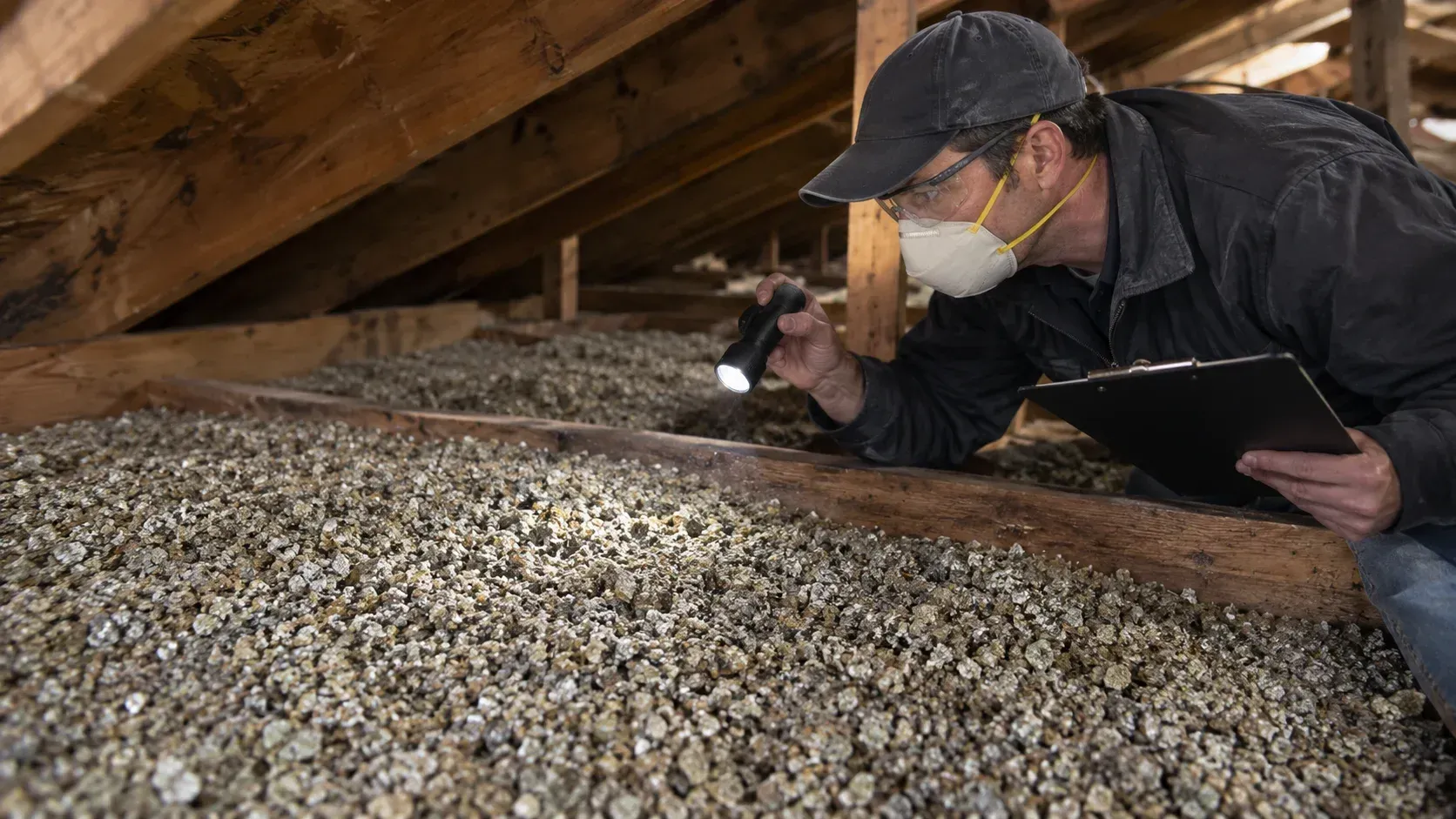
Table of Contents
- Introduction
- You Cannot Confirm It by Eye
- Why Vermiculite Insulation Asbestos Risk Traces Back to One Mine
- How to Recognize Loose Fill Vermiculite in an Attic
- What the EPA Advises About Attic Insulation Asbestos Risk
- How Vermiculite Insulation Asbestos Testing Actually Works
- Why Leaving It Alone Is Often the Right Answer
- Conclusion
- Have Your Attic Insulation Sampled Before Anyone Disturbs It
- Frequently Asked Questions
Key Takeaways
- No visual check can confirm or rule out asbestos in vermiculite. Only a lab can.
- Most vermiculite insulation sold in the United States came from a Montana mine with natural asbestos contamination.
- It looks like small gold to gray pebbles, poured loose rather than rolled in batts.
- The EPA advises leaving it undisturbed rather than handling or removing it yourself.
- Undisturbed material in a sealed attic is often safer left alone than ripped out.
Introduction
You cannot tell by looking, which is why asbestos testing is the only way to answer this and why loose fill vermiculite should be treated as asbestos containing until a laboratory says otherwise. The fibers are microscopic. A clean looking attic and a contaminated one look identical from the hatch.
That sounds alarming and it is mostly a reason for caution rather than panic. Undisturbed material in a closed attic is a very different situation from material someone just pulled apart with a shop vacuum.
You Cannot Confirm It by Eye
There is no color, texture, or smell that distinguishes contaminated vermiculite from clean vermiculite.
Asbestos fibers are far too small to see. They are also not evenly distributed through the material, so one handful can differ from another in the same attic. That is why sampling protocols exist and why a single glance, a photo on a forum, or a contractor's confident opinion is not an answer.
The only way to know for sure is through a professional survey, where material is sampled properly and sent to a laboratory for analysis. Everything else is a guess, and on this particular question a guess has a cost attached.
What you can identify by eye is whether the material is vermiculite at all. That part is straightforward, and it is covered below.
Why Vermiculite Insulation Asbestos Risk Traces Back to One Mine
The reason this material is treated with suspicion comes down to where most of it was dug up.
A very large share of the vermiculite insulation installed in American homes came from a mine near Libby, Montana, and that deposit sat alongside naturally occurring asbestos. The vermiculite itself is harmless. The contamination came from the rock it was mined with.
It was sold under the brand name Zonolite, among others, and it was poured into attics across the country for decades as a loose fill insulation. If your home predates the late 1970s, when these dangers became widely known, the odds of finding older hazardous materials go up considerably.
Not every piece of vermiculite came from that mine, which is exactly why testing matters rather than assuming. Some of it is clean. You cannot tell which is which from your attic hatch, and the EPA's guidance is built around that uncertainty.
How to Recognize Loose Fill Vermiculite in an Attic
Identifying the material is the one part you can do yourself, from the hatch, without touching anything.
What vermiculite looks like:
- Small pebbly granules, roughly the size of a pea or smaller
- Gold, brown, or gray brown in color, sometimes with a slight shimmer
- Poured loose across the attic floor rather than rolled out or stapled
- Accordion like layers in individual granules if you look closely
- Lightweight, and it shifts like gravel rather than holding a shape
What it is not:
| Material | How it differs |
|---|---|
| Fiberglass batts | Pink or yellow, rolled, held together in sheets |
| Blown cellulose | Gray fluffy shredded paper, not granular |
| Blown fiberglass | White or pale, fibrous, not pebbly |
| Perlite | White granules rather than gold or gray |
Look from the hatch. Use a flashlight. Do not climb in, do not run your hands through it, and do not move boxes stored on top of it to get a better view.
What the EPA Advises About Attic Insulation Asbestos Risk
The federal guidance on vermiculite is unusually simple, and most of it is about what not to do.
The EPA advises homeowners to leave vermiculite insulation undisturbed, and that advice carries several practical consequences:
- Do not go into the attic unless you have to, and limit time there if you do.
- Do not store anything in an attic with vermiculite, because retrieving it disturbs the material.
- Do not sweep, vacuum, or try to remove it yourself. A household vacuum will put fibers into the air of your home.
- Do not let contractors disturb it during other work until it has been tested.
- Seal gaps between the attic and living space where you reasonably can.
Current EPA guidance is published and worth reading directly before you act, since this is a federal health matter rather than something a contractor should be interpreting for you.
That fourth point is where most people get caught. An electrician running new wire, an HVAC crew, or a roofer can disturb attic insulation without knowing what it is. Tell anyone working in the attic what is up there first.
How Vermiculite Insulation Asbestos Testing Actually Works
Testing is a sampling and laboratory process, not something resolved during a walkthrough.
How it goes with us:
- We look at the material and the conditions around it.
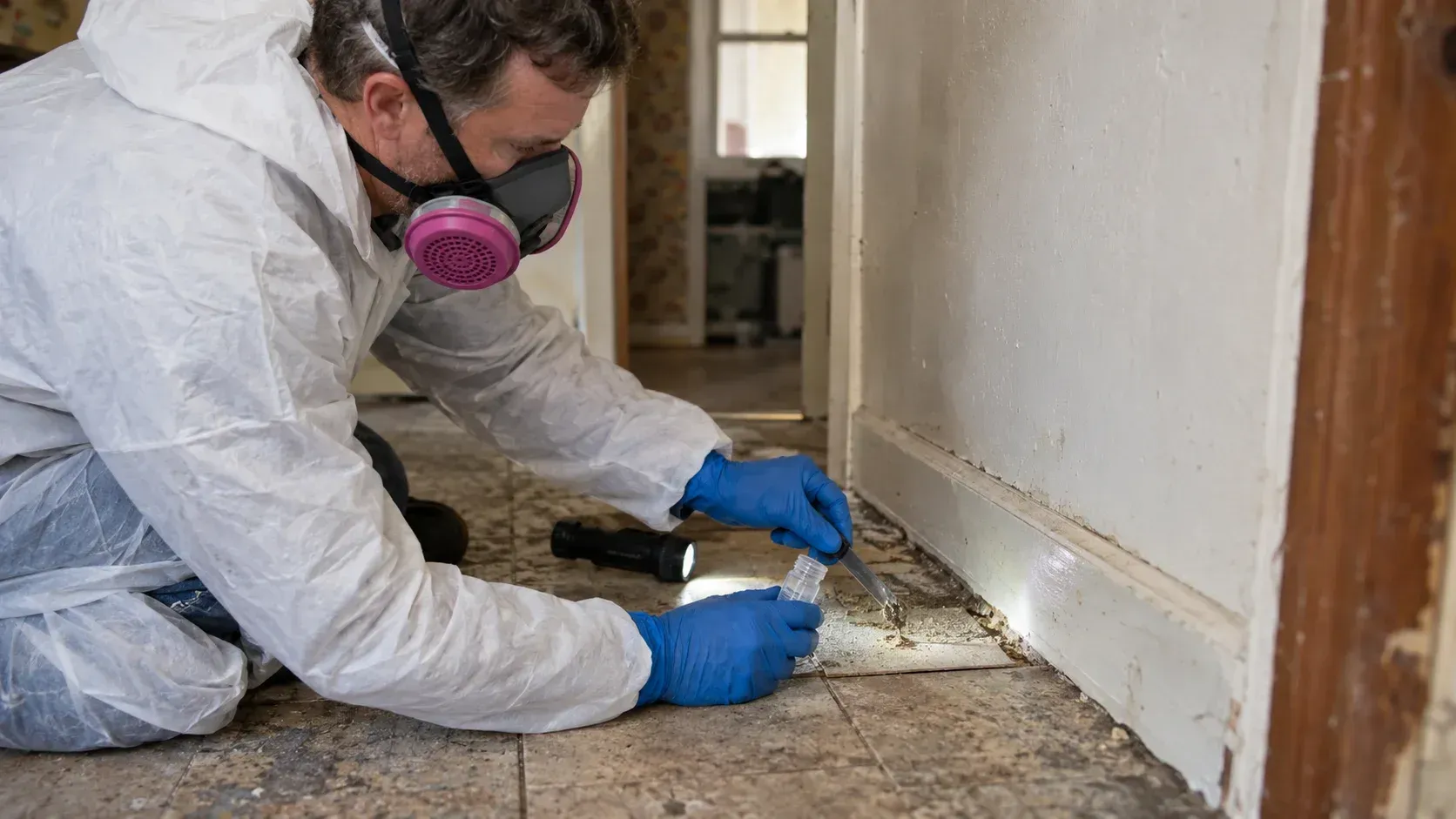
- We collect samples from the insulation and from other suspect materials in different areas of the property.
- Samples go to a third party laboratory for analysis.
- We go over the report with you when the results come back.
- If removal is needed, that report determines how the work is handled.
Two details matter. The laboratory is independent of us, which means the result is not coming from the same people who would do the removal. And sampling vermiculite is itself a disturbance, which is a reason to have it done by someone set up for it rather than scooping a jar yourself.
If you are weighing whether to test at all, the testing costs involved are modest against what disturbing the material carelessly can lead to. We serve Lawton and Duncan along with the surrounding communities.
Why Leaving It Alone Is Often the Right Answer
This is the part homeowners do not expect from a company that removes asbestos. Removal is frequently not the right first move.
Intact, undisturbed material in a sealed attic is not releasing fibers into your living space. The hazard comes from disturbance, and the single largest disturbance anyone usually performs on vermiculite is removing it. Done badly, abatement can contaminate a house that was fine the day before.
Removal does become the answer in specific situations: when the attic has to be accessed regularly, when you are renovating and the material cannot be left in place, when it has already been disturbed, or when it is migrating into the living space.
So the honest sequence is test first, then decide, and expect that the answer may be to seal it off and leave it. Anyone who recommends removal before a lab result has come back is skipping the step that decides the question.
Conclusion
No one can look at attic insulation and tell you whether it contains asbestos, so the safe default with loose fill vermiculite is to treat it as though it does until a laboratory says otherwise. Identify the material from the hatch without touching it, keep everyone out of the attic, tell any contractor working up there what is present, and get samples collected properly. Then decide. Quite often the right outcome is leaving it exactly where it is, undisturbed and sealed off from the rest of the house.
Have Your Attic Insulation Sampled Before Anyone Disturbs It
If you have pebbly loose fill insulation in an older Lawton area home, do not handle it and do not let anyone else handle it until it has been tested. MJ Enterprises has spent more than 40 years helping homeowners and business owners deal with asbestos across Lawton, Duncan, Altus, and Frederick. We collect samples for third party laboratory analysis and go over the report with you before any decision gets made. Call (580) 585-2367 or
reach our team to get it sampled properly.
Frequently Asked Questions
Does all vermiculite insulation contain asbestos?
No, but a large share of what was installed in American homes came from a Montana mine with naturally occurring asbestos contamination. You cannot tell contamination from clean material by looking, so the safe approach is to treat loose fill vermiculite as asbestos containing until a laboratory confirms otherwise.
How do I know if my attic insulation is vermiculite?
Vermiculite looks like small pebbly granules, roughly pea sized, in gold, brown, or gray brown, poured loose across the attic floor rather than rolled in batts. Look from the hatch with a flashlight and do not touch or move it.
Can I test vermiculite insulation myself?
Collecting a sample disturbs the material, which is the main thing to avoid. Have sampling done by someone equipped for it, and have the analysis run by a laboratory. A visual check cannot confirm or rule out asbestos regardless of who performs it.
Should I remove vermiculite insulation from my attic?
Often not. Undisturbed material in a sealed attic is not releasing fibers into living space, and removal is itself a major disturbance. Removal makes sense when the attic needs regular access, during renovation, or if the material has already been disturbed.
What does the EPA say about vermiculite insulation?
The EPA advises leaving it undisturbed, staying out of the attic, not storing items there, and not attempting removal yourself. Check current EPA guidance directly before acting, since this is federal health guidance rather than a contractor's interpretation.