How Do You Know If Your Office Needs Professional Disinfection After Several Employees Get Sick in One Week?
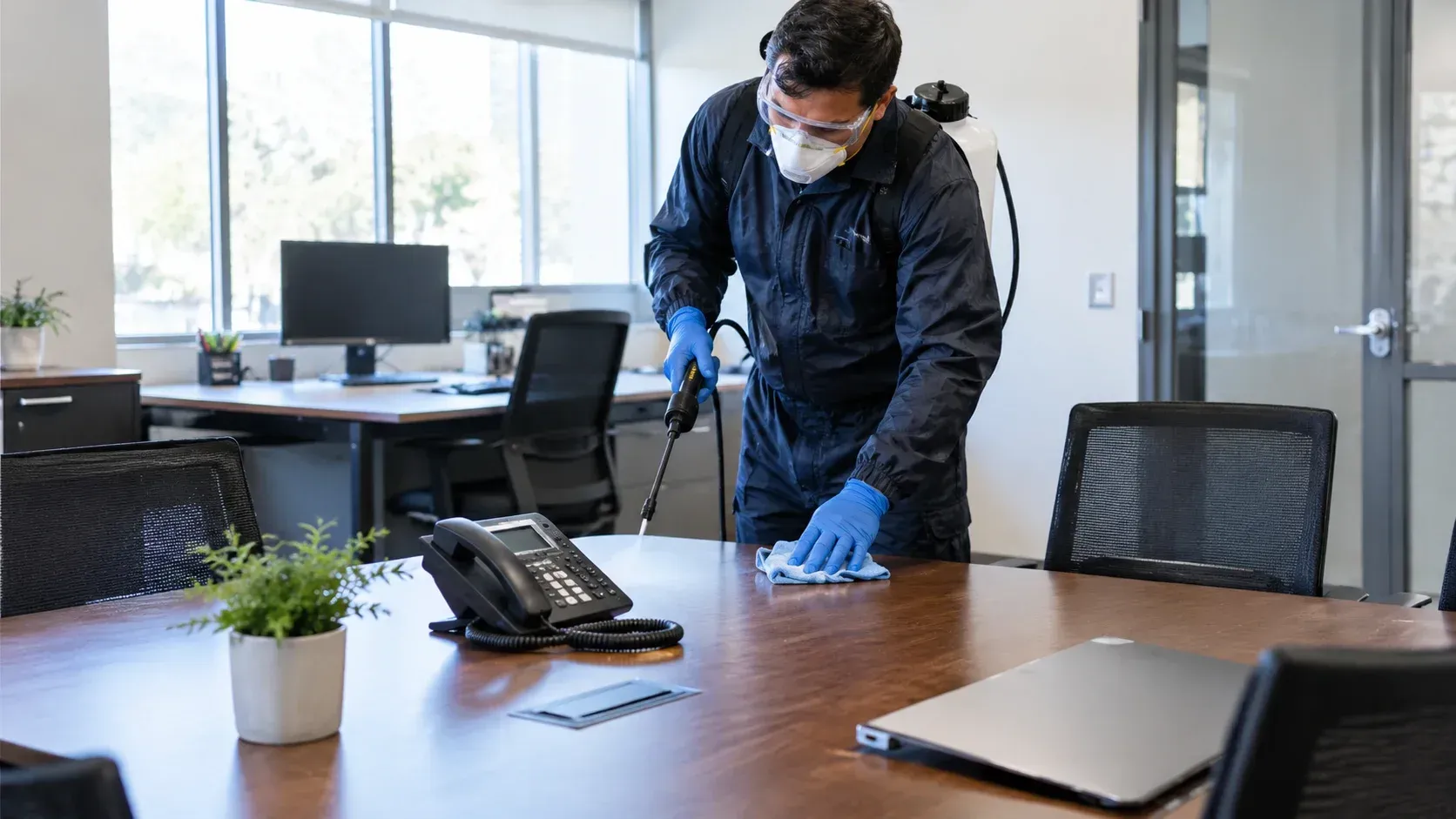
Table of Contents
- Introduction
- The Threshold That Actually Justifies the Call
- When One Sick Employee Does Not Need Office Disinfection
- What Professional Office Disinfection Reaches That Routine Cleaning Misses
- Be Honest About What Disinfection Does Not Fix
- What to Do in the First 24 Hours
- Questions Worth Asking Before You Book Commercial Disinfection
- Conclusion
- Talk Through Disinfection for Your Workplace
- Frequently Asked Questions
Key Takeaways
- Several similar illnesses within a few days, a confirmed case, or shared air handling usually justifies professional treatment.
- One sick employee almost never does. Routine high touch cleaning covers it.
- High touch density matters more than square footage when deciding.
- Surface disinfection does not address air, ventilation habits, or people coming to work sick.
- Public health guidance should drive the health decisions, not a vendor.
Introduction
An office usually warrants professional infection control when several people develop similar symptoms within a few days, when a case has been confirmed, or when the space shares one air handler and a high density of touched surfaces. A single employee out sick, with nothing else going on, generally calls for routine cleaning of high touch surfaces rather than a service visit.
The useful version of this question is about thresholds rather than about whether disinfection works. Knowing where the line sits saves money in the common case and prevents delay in the uncommon one.
The Threshold That Actually Justifies the Call
Clustering is the signal. One person sick is an event, and several people sick in the same week in the same space is a pattern.
What moves a situation across the line:
- Multiple similar illnesses within a few days, which suggests transmission inside the building rather than coincidence
- A confirmed case of something notifiable or significant
- Shared air handling across the affected area
- High touch density, meaning lots of shared keyboards, phones, door handles, and equipment
- A vulnerable population on site, such as a clinic, care setting, or facility serving older adults
- Customer facing operations where an outbreak has reputational as well as health consequences
- A space that has been closed after an incident and needs to reopen with documentation
Two or more of those together is a reasonable trigger. One alone usually is not.
The clustering window matters too. Three people out over three weeks is a winter. Three people out over three days, sharing a floor, is worth taking seriously.
When One Sick Employee Does Not Need Office Disinfection
Most weeks do not require a service call, and it is worth saying so plainly.
If one person is out with an ordinary seasonal illness, no one else is affected, and your space is not a clinic or care setting, routine cleaning handles it. That means wiping down the surfaces that person actually touched, their workstation, shared equipment they used, door handles and the break room, with your normal cleaning products used according to the label.
What actually helps more in that scenario costs nothing: send people home when they are sick and mean it, make it easy to stay home, and keep hand hygiene supplies stocked and visible. A disinfection visit for a single routine illness buys reassurance rather than risk reduction.
We would rather tell you that than take the booking. The call is worth making when the pattern justifies it, and a vendor who says yes to everything is not giving you information.
What Professional Office Disinfection Reaches That Routine Cleaning Misses
The difference is coverage and consistency rather than a stronger chemical.
| Routine cleaning | Professional treatment | |
|---|---|---|
| Surfaces reached | What staff wipe down | Broad coverage including hard to reach areas |
| Consistency | Varies by who is working | Systematic across the space |
| Air and ventilation systems | Not addressed | Can be included |
| Documentation | None | A record of what was treated and when |
| Scale | Fine for a desk | Suited to a whole floor or building |
That documentation line matters more than people expect. If you have closed a space, told staff it was treated, or need to show a client or an insurer what was done, having a record from a third party is the difference between a claim and evidence.
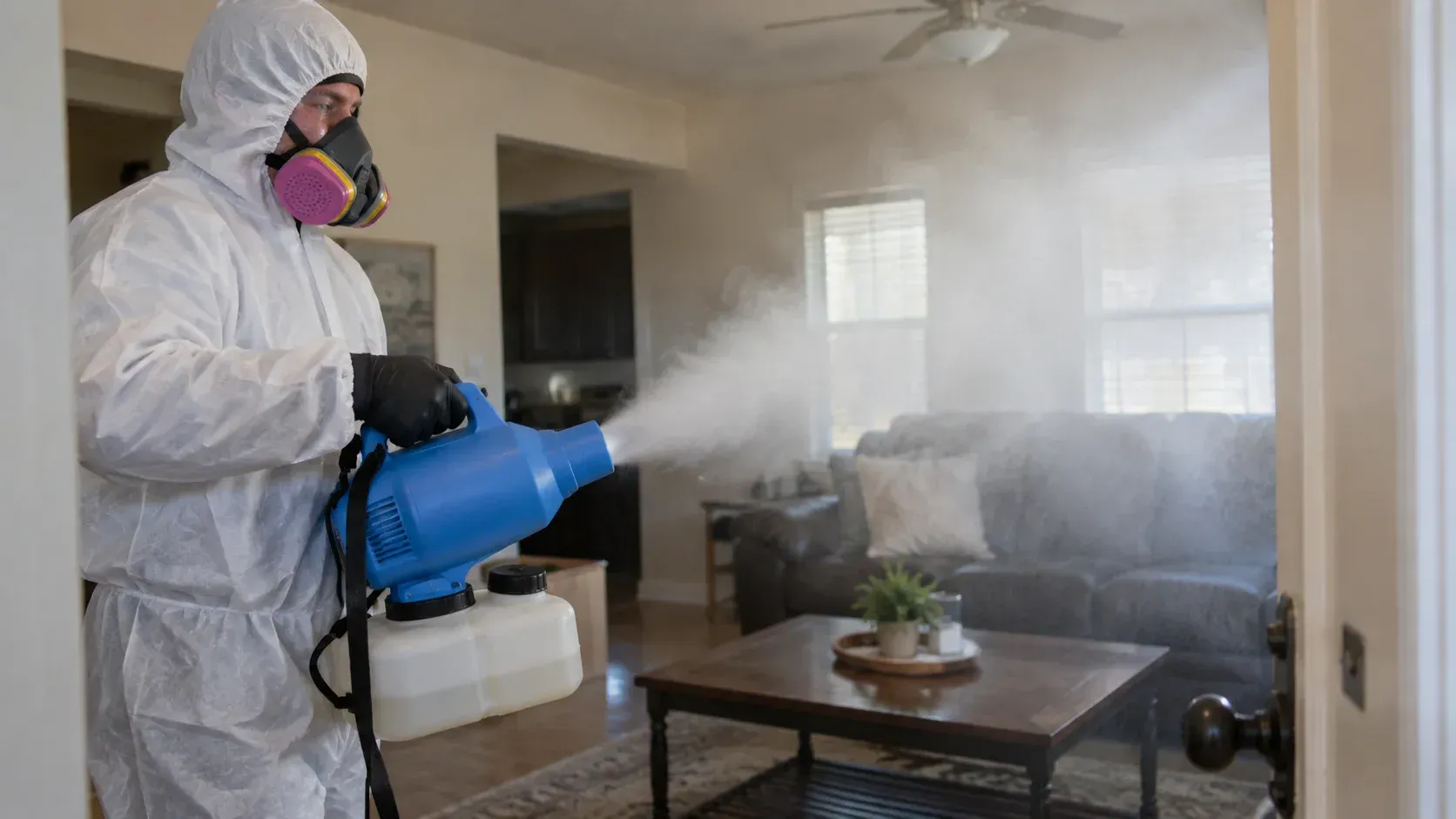
Our air fogging work covers air, ductwork and ventilation systems as well as surfaces, which is the part a cleaning crew with spray bottles is not set up to do.
Be Honest About What Disinfection Does Not Fix
This is the section most vendors leave out, and leaving it out is how businesses end up disappointed.
Disinfection treats the space as it is on the day it is treated. It does not:
- Prevent the next illness, because people bring it back in
- Address airborne transmission going forward, which for respiratory illness is a ventilation and behavior question
- Replace sick leave policy, which is the single most effective control any employer has
- Fix poor ventilation, which is a building systems issue
- Substitute for medical advice, for anyone who is ill
Treating the building while people come to work sick is spending money on the wrong end of the problem. If you are going to do one thing after an outbreak, make it the policy change. The treatment is worth doing alongside it, not instead of it.
For anything concerning actual health decisions, exposure, reporting obligations, or whether an illness is notifiable, follow CDC and Oklahoma State Department of Health guidance and talk to a medical professional. We handle the building. We do not advise on the illness.
What to Do in the First 24 Hours
Order matters, and most of the first day is not about disinfection at all.
- Send affected people home and ask them not to return until they are well.
- Find out what is actually going on. Similar symptoms or unrelated ones changes everything.
- Note who sat where and which shared equipment was in play.
- Increase ventilation if your system allows it, and open what you can.
- Wipe high touch surfaces now, without waiting for anyone to arrive.
- Decide whether the pattern crosses the threshold described above.
- Call for an office disinfection assessment if it does, and ask for the scope in writing.
Steps one through five cost nothing and happen before any vendor is involved. If you only get through those and the cluster stops, you did the right thing and saved the expense.
Questions Worth Asking Before You Book Commercial Disinfection
Disinfection services vary a great deal, and the differences are not obvious from a website.
Ask any provider:
- What exactly gets treated, surfaces only or air and ventilation as well?
- How long does the space need to be vacated, and when can staff return?
- What preparation is needed from us beforehand?
- Do we receive documentation of what was treated?
- How does this fit with our regular cleaning, rather than replacing it?
- What do you recommend we change so this is less likely to recur?
That last question is the one that separates providers. Anyone whose answer is only "book us again quarterly" is selling a subscription. A straight answer involves ventilation, sick leave, and hand hygiene, most of which earns them nothing.
Conclusion
Several similar illnesses in a few days, a confirmed case, or a shared air system with lots of touched surfaces is the point at which professional treatment earns its cost. One person out sick is not, and routine cleaning covers it. Get the first day right before you call anyone, understand that treating the building does not change who walks into it tomorrow, and take the health guidance from public health authorities rather than from a vendor. Then make the call if the pattern justifies it.
Talk Through Disinfection for Your Workplace
If something is going around your office and you are not sure whether it crosses the line, call and describe it. We will tell you honestly if routine cleaning covers it. MJ Enterprises provides infection control and air fogging for businesses across Lawton, Duncan, Altus, and Frederick, treating air, ductwork, ventilation systems, and surfaces. Call (580) 585-2367 or
get in touch and we will scope it properly before anyone commits to anything.
Frequently Asked Questions
When should a business get professional disinfection?
When several people develop similar symptoms within a few days, when a case has been confirmed, or when the affected area shares one air handler and has many high touch surfaces. Clinics, care settings, and customer facing operations have a lower threshold.
Is one sick employee enough reason to disinfect the office?
Usually not. Routine cleaning of that person's workstation, shared equipment, door handles, and the break room covers an ordinary seasonal illness. Sending people home when sick and keeping hand hygiene supplies stocked does more than a service visit would.
What is the difference between office cleaning and disinfection?
Coverage and consistency. Routine cleaning addresses what staff wipe down. Professional treatment is systematic across a space, can include air, ductwork, and ventilation systems, and produces a record of what was treated and when.
Does disinfecting an office prevent future illness?
No. It treats the space as it is on the day of treatment. People bring illness back in, so sick leave policy, ventilation, and hand hygiene matter more for what happens next. Treatment works alongside those, not instead of them.
What should we do first after an office outbreak?
Send affected people home, find out whether symptoms are similar, note who sat where, increase ventilation if you can, and wipe high touch surfaces immediately. Then decide whether the pattern justifies professional treatment. Follow public health guidance on the health questions.